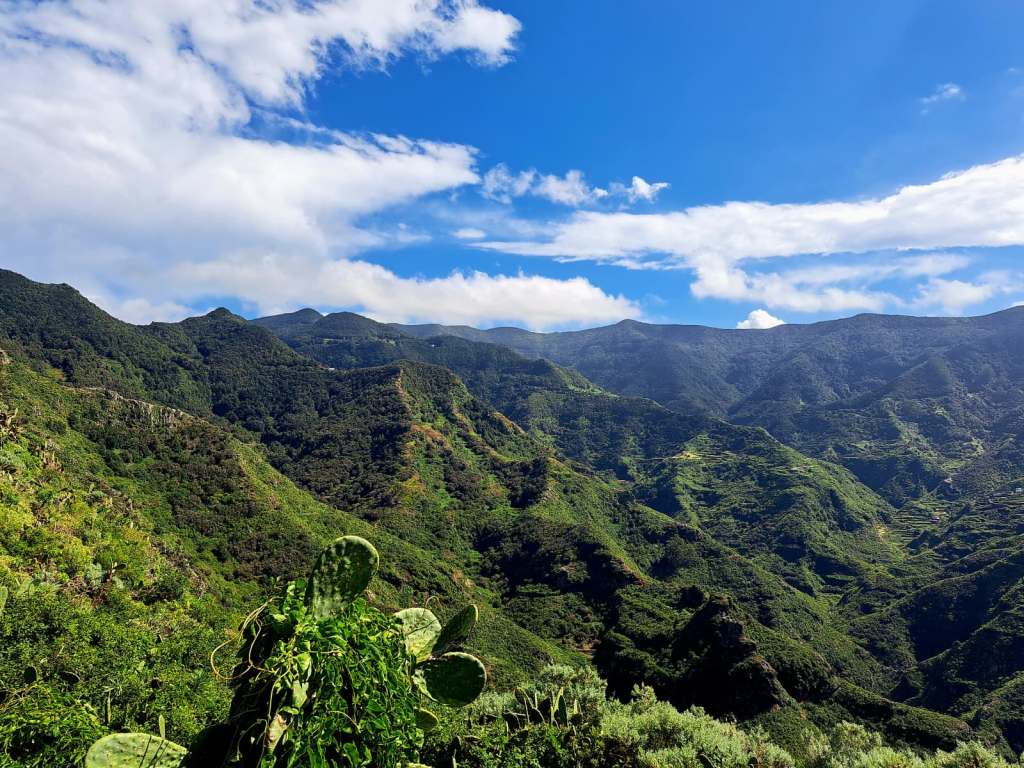
The Tenerife Blue Trail is a race I have been dreaming about since the first moment I set foot in Vilaflor back in 2025. The 110k course wraps around some of the most beautiful and demanding terrain in the Tenerife. Unfortunately, storm Therese (the 19th storm of the year!!) hit the island on the same week as the race was planned. Due to a red bad weather warning, all outdoors activities on the island for that week had to be cancelled. However, I still want to share with you how I prepared for this race.
Preparation
After my last race of 2025 in September, my body needed a break from so much training for ultra trail marathons. I had planned that the last months of that year should be used to do some road races, find out what my new PRs for shorter distances were and have fun training differently, with more focus on speed. Last year gave me a lot of insights about trail running and ultra-marathons. Despite the fact that I achieved competitive results, I felt that last year was all about discovering and exploring this sport, as almost each race introduced me to either a different environment or distance. For 2026, my goal is to take all the lessons from last year and be more competitive, that being trying to beat my predicted UTMB index times for each race.
Discovering the treadmill
I had targeted January as the month to start preparing the 2026 season, with the Tenerife Blue Trail 110k as the first big goal. The end of December brought a lot of snow and cold to the Netherlands, so much that it was not possible to safely run outside anymore. This brought me to the treadmill for the first time. And this was the biggest game changer for this season.
I was already aware that the treadmill at the gym right next to our place could do 30%(!!) incline. However, at that moment in time it didn’t really cross my mind how important of a training tool the treadmill could be for a trail runner. The bad weather forced me into a week of running in the gym and to start exploring the treadmill and training protocols. I was surprised by how many pro athletes incorporate treadmill sessions into their general planning: Tom Evans, Kilian Jornet, David Roche… for the most varied reasons, they all consider it an important piece of their training. Why does it have such a bad connotation all over the internet? The stimuli I was getting from the indoor sessions was so relatable to that during the races. I felt I had finally found a way of bypassing the lack of hills in the Netherlands.
The first few weeks were a lot of trial and error. I experimented with different incline percentages, session lengths and weekly compositions. At one point I overdid it — too many high-incline sessions back to back — and had to take a step back. The key lesson was that the treadmill is an incredibly powerful tool, but it’s also very easy to overload your legs when you go steep every day. Once I dialled back the intensity on recovery days and kept the steep work for the key sessions, everything started clicking.
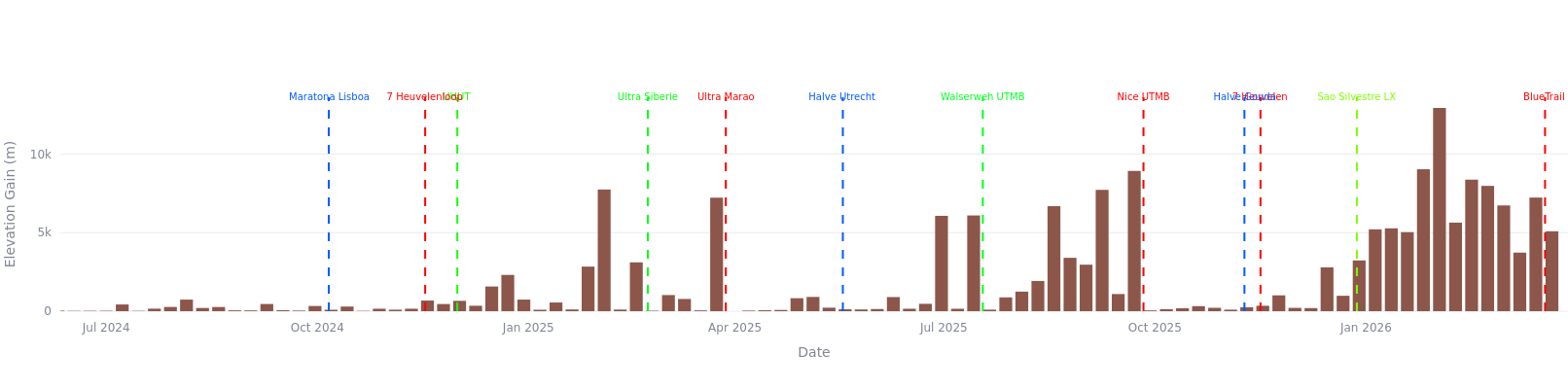
The impact of the treadmill on my weekly elevation can easily be seen in the weekly elevation chart provided below. I went from every now and then (mostly when abroad) being able to do 3000m D+, to consistently reaching 5000m D+.
Some of the most important resources I found online were from David Roche and Scott Johnston — Tom Evans and Ruth Croft’s coach. After all the experimentation, I finally found a solid week scheme that I could follow in a safe manner, improve fitness and make progression.
Training blocks
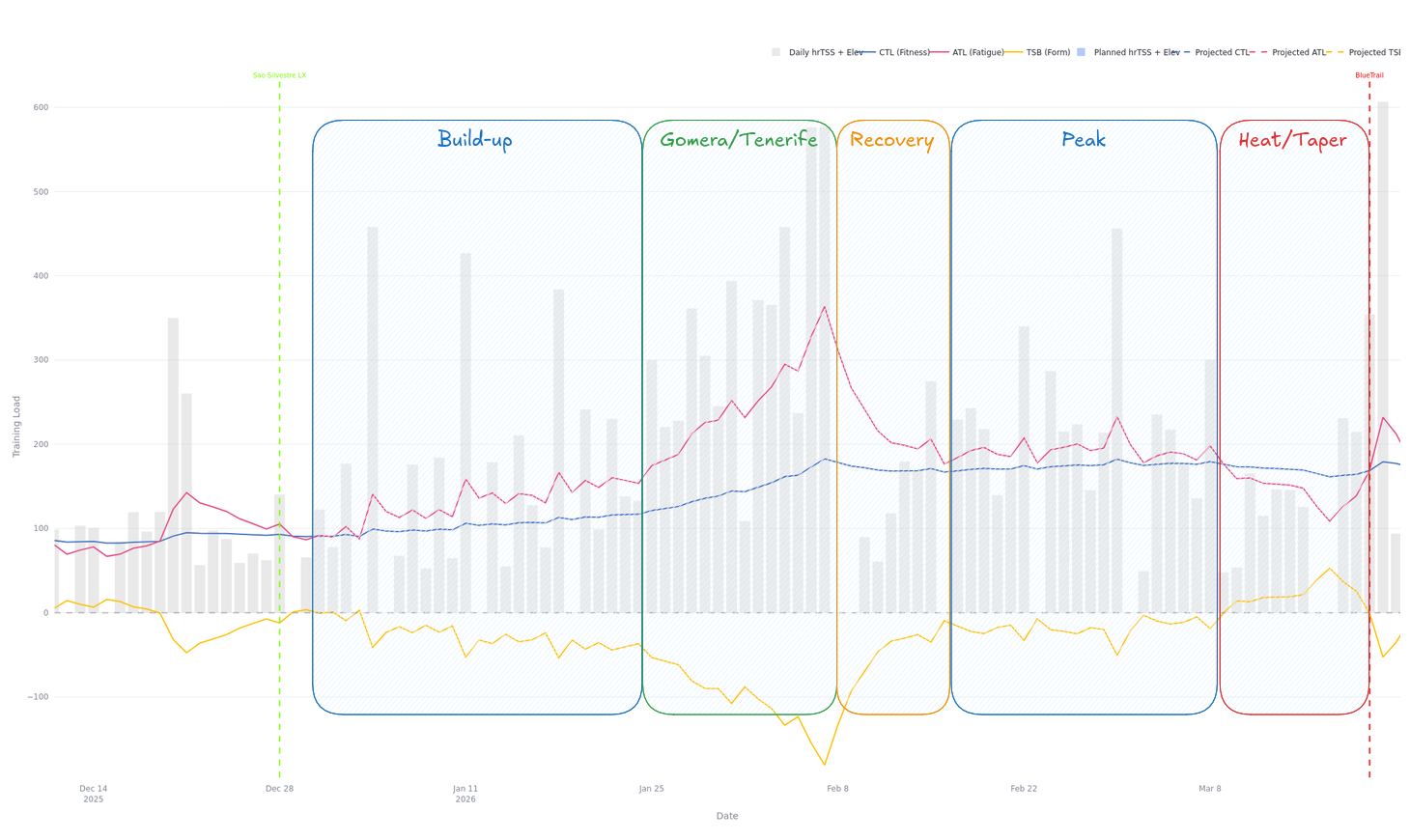
The preparation for this race can be split into 4 different blocks: build-up, La Gomera/Tenerife, peak and taper. My fitness progress and periodization can be clearly seen in the PMC below: a clear build-up in fitness and fatigue and a high peak followed by tapering and increase in form. This supports even more the feeling I had that this was by far my best training cycle ever.
Build-up
My goal for January was very clear: prepare my body for the Tenerife training camp in February. This first block is the moment in which we set the foundation for the coming months (and season). During such a build-up it’s even more important to slowly ramp-up the effort and to be consistent with strength training. The focus was on generic trail running workouts already with some race specific effort.
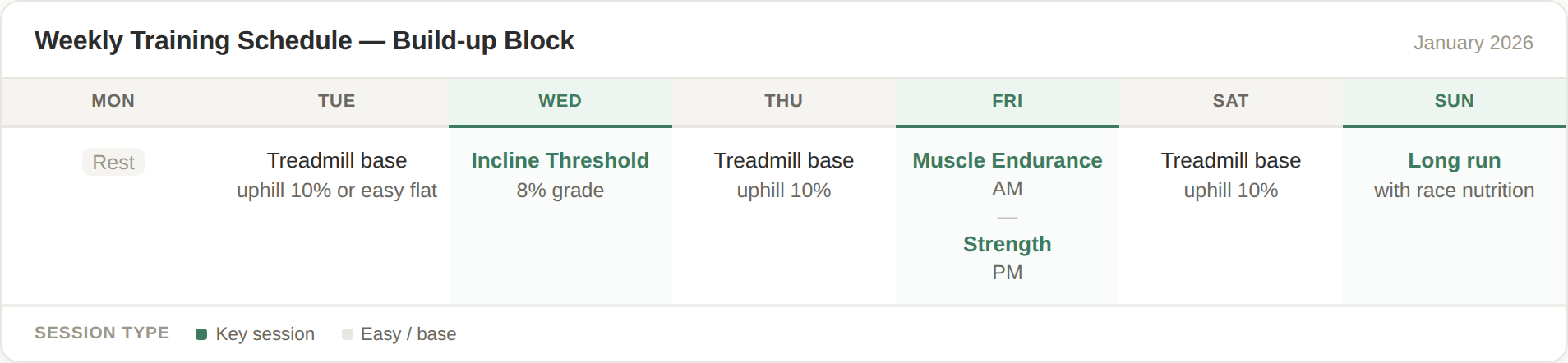
As mentioned above, I spent quite some time trying things out with the treadmill until I arrived into something that I could do week after week. The training scheme below was my final sketch of the build-up block. The distances, paces and duration are not included as they would vary from one week to the other.
La Gomera and Tenerife
There were two goals for this training block: enjoy the hike in La Gomera while taking more weight on the backpack than I would actually need so that there was more load on the legs (and if possible, do max effort on hills at the end of each day), and while in Tenerife, do as much of the race course as possible.
These two weeks were a huge success: I did my highest volume ever, reaching 208kms with more than 12000m D+.
These two blocks have been fully described in separate posts. If you want more detail, please check:
⁃ Hiking the GR132 in La Gomera
⁃ Thoughts on Tenerife training block
Peak
When coming back from Tenerife my priority was to let my body recover, assimilate all the build-up fitness and get ready for the final peak week before starting to taper. The biggest struggle I had during this period was to be able to keep the fitness built in Tenerife without getting injured nor peaking too early. Therefore, I had to play around with volume and intensity for 2 weeks so that I could finally get my body ready to really taper for the race.
Heat, Taper, Final fitness
My taper strategy for this race focused on reducing volume and intensity by 50% two weeks before the race and during race week do two activation runs (20k max in total) depending on how I was feeling.
The most interesting element of my taper was the introduction of active heat training. The idea behind it is that exercising in hot conditions can emulate some of the physiological benefits of altitude training — particularly in terms of plasma volume expansion and improved cardiovascular efficiency. Three weeks before the race, I started doing my easy treadmill sessions wearing multiple layers and a beanie to drive up my core temperature. I did around 4 of these sessions per week across those final 3 weeks, so roughly 12 sessions in total. To keep things under control, I monitored both my heart rate zones and perceived effort throughout each session. The goal was to stay in easy aerobic zones — the moment heart rate started drifting up or I felt off, I would strip a layer or cut the session short.
These sessions were tough. Even at easy paces, the extra clothing makes everything feel significantly harder and it’s very easy to overdo it and accumulate too much stress and fatigue. In hindsight, I think it’s a nice complement to the sauna sessions I already do and it’s something worth investing in if a race happens in a country much warmer than where I usually train. Whether it actually impacted my performance, I cannot tell — the race never happened. But I do believe the body adapted to the heat stress and I plan to keep experimenting with it in future training cycles.
Race strategy
In this section I want to share my approach to the race with respect to nutrition and pace. Keep in mind that the race was cancelled, so everything I am sharing here is purely hypothetical and based on my previous training times done on the race course.
One of the biggest advantages I had for this race is that I had already done most of the first half of the course, which is — in my opinion — the hardest. To me, it helps tremendously mentally to know how far I am during a long climb and, especially after the solo time in February, I knew most of them by heart. That together with the fact I am a good climber, gave me the confidence to try hard and face the race with a very ambitious time goal. However, we will never know how it would have turned out.
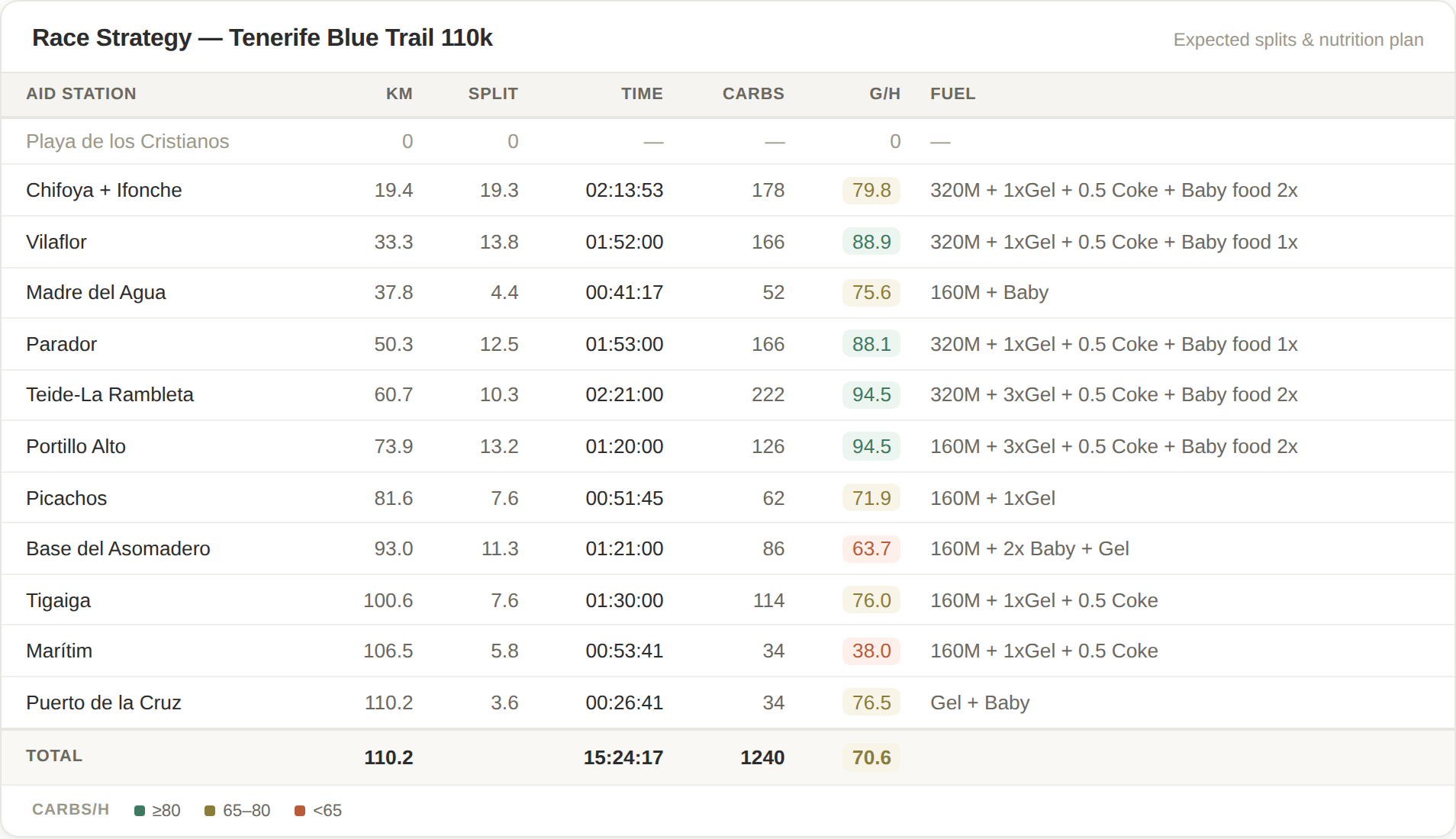
Nutrition: If you follow my Strava, you notice that there’s nothing different from my usual long runs: Maurtens, baby food pouches and SiS Go Gels. I try to keep my nutrition as similar to my training as possible, not only in terms of what I eat but also how much I eat. The table below does not take into account possible snacks at the aid stations, which happens all the time.
Pace: As you can see from the table below, I was very optimistic about the pace. Maybe too optimistic. However, this race I wanted to go for it, all gas no brakes and I was basing my paces on what I had done during training plus a tiredness coefficient. I also think it’s a type of elevation profile that suits me quite well: a relatively constant incline gradient (the treadmill is perfect for that!). I guess we will have to wait for next year to see whether I was right or not!
The table below shows a combined view of my expected finish times per section together with the nutrition.
Tenerife Blue Trail 47k
📍 La Orotava, Tenerife | 🏃 47km | ⛰️ 2595m elevation gain | ⏱️ 5h 29m 53s l View on Strava →
I think the biggest frustration I had with the race not going through was that I had built up all this fitness, stored energy and suddenly had nowhere to unload it. Therefore, I decided that it was important to give my body one long stimulus that would sort of emulate the race effort so that I could finalize the whole training cycle properly.
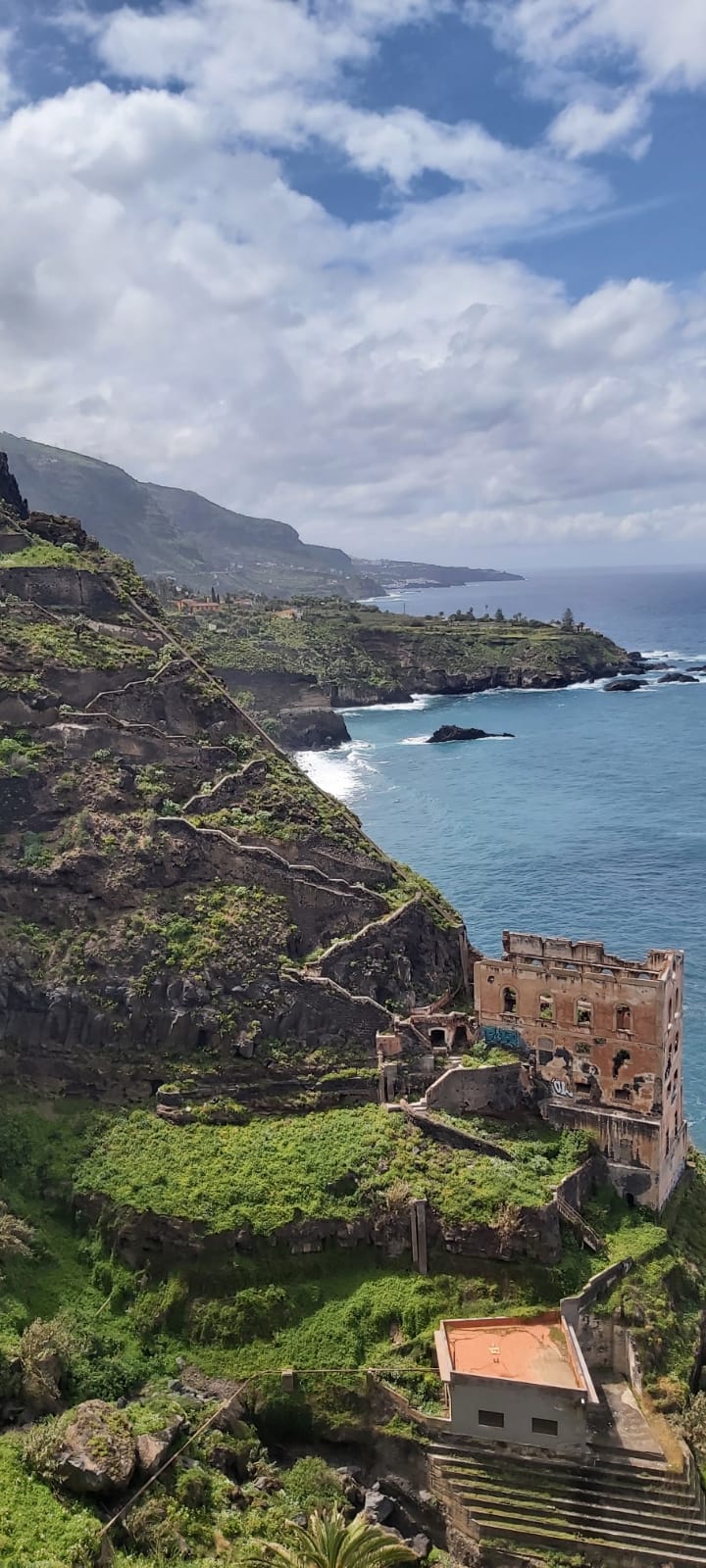
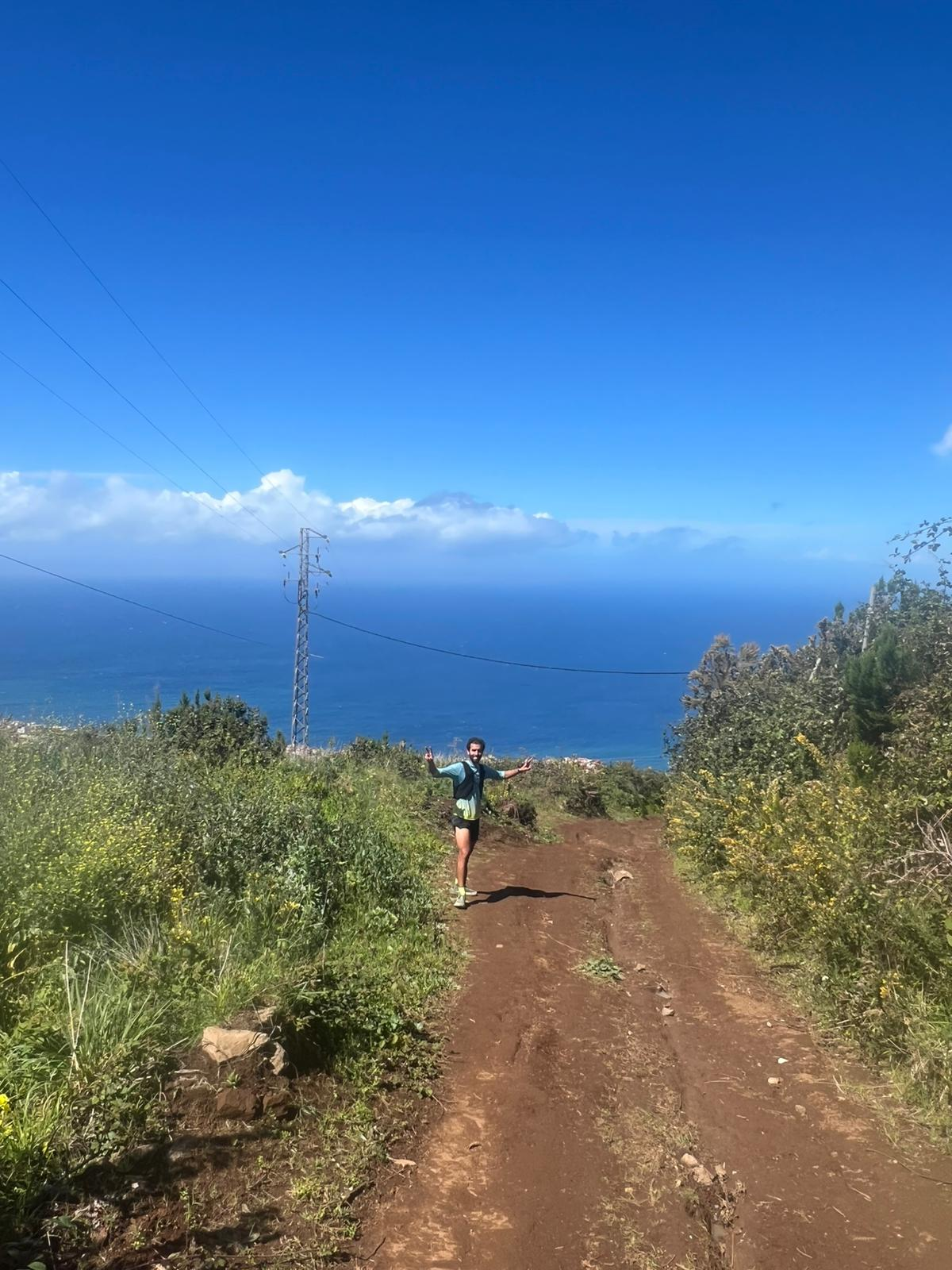
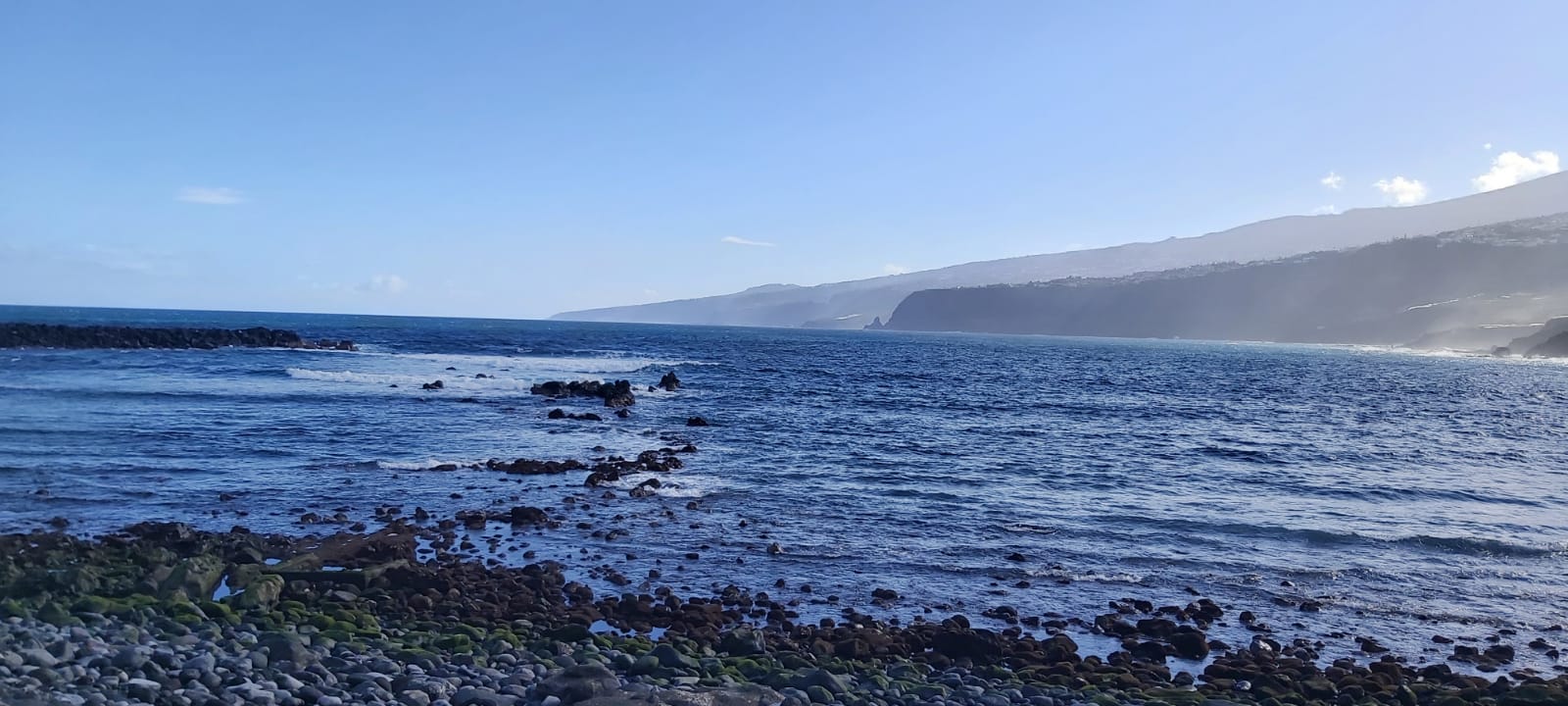
Despite the fact that the race didn’t go through, the weather was actually very pleasant on the side of the island where I was staying. I went to Tenerife together with Fanny and some friends of ours were also joining to do the race. Given that we were all disappointed, we decided to do the shorter variation of the race with 47k: weather forecast was good, it didn’t climb too high and would allow us to do the recognition of the last part of the route.
It was a very nice run with beautiful landscape and good efforts during the climbs. The hardest part was clearly the climb until the top of Asomadero: almost 700m D+ in 1.5kms. I can only imagine the pain it will be next year to do this at a late stage of the race!
Take-aways
The combination of consistent uphill training on the treadmill and trail running outdoors has significantly boosted my fitness. I used to dismiss the treadmill as boring or inferior — turns out it was exactly what I needed to train hills while living in the Netherlands. This combo is here to stay, even when I move to another country.
To be good at something, you need to spend time doing it. To be good at uphill, run uphill often. To be good at race nutrition, practice it during training.
Be open to change and try things yourself. If I hadn’t been forced onto the treadmill by bad weather, I might never have discovered how effective it is. Sometimes the best improvements come from the things you didn’t plan.
 Off Trail