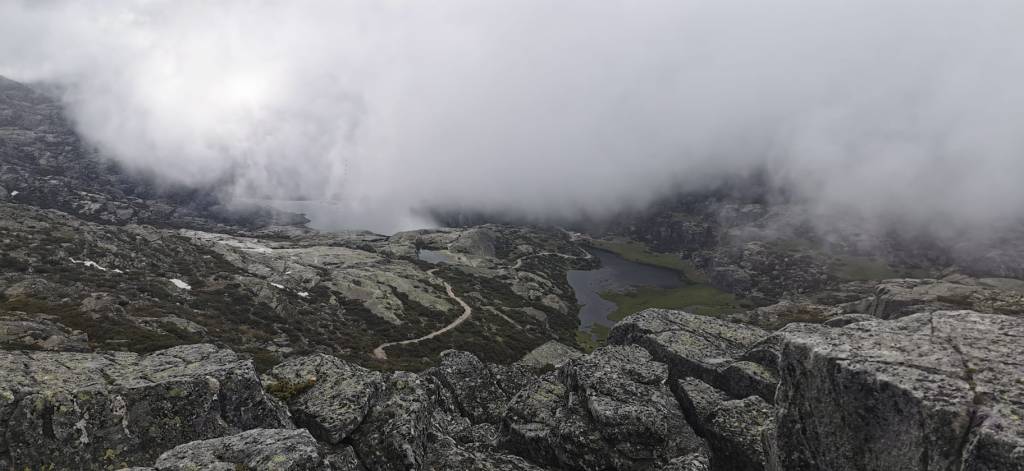
I see this DNF as an important moment in my short (ultra-)trail adventure: it is a good confrontation of how new and inexperienced I am in this sport, even when I thought I had started to grasp some of its nuances. I learned a lot from it and I am actually grateful it happened now, as I was in Portugal being supported by younger brother and dad on the spot. This made me feel safe about stopping as they were there right away for me and took me to the medical tent. In this post I will walk you through my strategy for the race, how it went and what I take from it for the future.
1. Race strategy
1.1 Nutrition
1.2 Pacing
2. A red flag I almost ignored
3. The race
4. What I learned
4.1 Fueling
4.2 Race execution
4.3 Life around the race
5. Looking forward
Race strategy
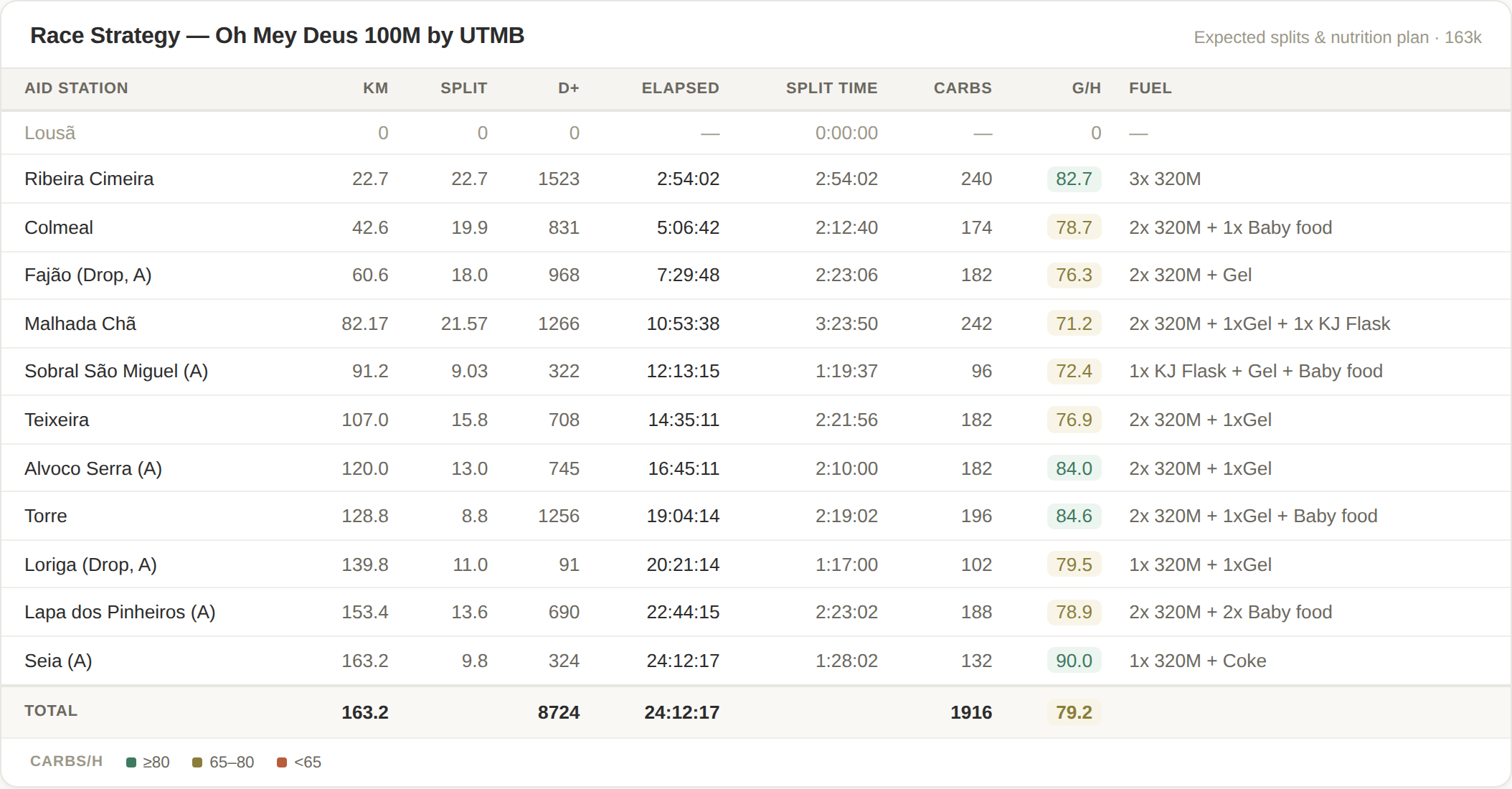
I felt really good in the weeks and days leading to the race, just like during 95% of the training sessions I had this year. I built my race plan the same way as before: nutrition based on what had worked in long sessions and pacing based on training data, previous races, and the predictions given by UTMB.
Nutrition
The plan leaned on the drink mix I had successfully used during training: 80g of carbs (maltodextrine, fructose and salt) per 500ml of water. I had comfortably done six-hour sessions on it and since I was making the mix myself I could play with flavors to avoid taste fatigue. For the night section, I planned to add some real food — a flask recipe I “borrowed” from Kilian Jornet: beetroot, cacao, oats, avocado and honey.
The biggest difference from previous races was that I went very light on baby food, even though it had been a staple in Nice and had let me keep eating all night long. To save weight, I carried only the food I had planned to eat plus a single backup bar and gel. The plan averaged 80g/hour from carried food, supplemented by whatever I felt like grabbing at the aid stations (usually watermelon).
On race day I had my usual breakfast — oatmeal with fruit — and 80g of carbs three hours before the start. The race only started at 16:00 and I didn’t want to begin on a full stomach, so I decided I wouldn’t eat anything else besides a gel fifteen minutes before the gun.
Looking back, three mistakes were already baked in before I crossed the start line:
• I should have started with real food to set the stomach and only later leaned on sugar.
• I didn’t eat enough before the race. A light breakfast and an energy drink until 16:00 isn’t a lot of food on a normal day, let alone before a 100-miler.
• I carried exactly the food my predicted pace required — no margin for anything going wrong.
Pacing
One other aspect I still need to grow a lot is how to pace such a race. When I am running on the road, the predictions for how long I can hold a pace are relatively accurate. In trail, especially with steep sections, I am still figuring it out. For OMD, I based my paces on the training sessions, the estimated index pace and on the previous races I had done before. This time I was gonna give it a try to keep up with the predicted paces.
A red flag I almost ignored
Two days before the race I did some blood tests. Over the past few years I have lost some hair density and the doctor recommended me to first do a blood test. The results came back showing my ferritin at 28.8 ng/ml — well below the 50 ng/ml baseline for healthy values. I remembered a video from Ran to Japan, the YouTube runner, who ended up in the medical tent during a marathon and tested at 17 ng/ml afterwards. This did something to me. What if I am not completely healthy to do this? Will it hit me mid-race? But I was feeling fine, the only symptom I had was the hair loss and I decided not to pay too much attention to it.
The first of May came with a lot of sun and a smile on my face: it was finally time to race again. I had my usual breakfast, then went with my younger brother and my dad to the start, about 75 minutes from my grandparents’ place — a small village lost in Portugal and time.
Oh Meu Deus by UTMB
📍 Lousã, Portugal | 🏃 50km (out of 167) | ⛰️ 2651m elevation gain | ⏱️ 6h 31m 14s l View on Strava →
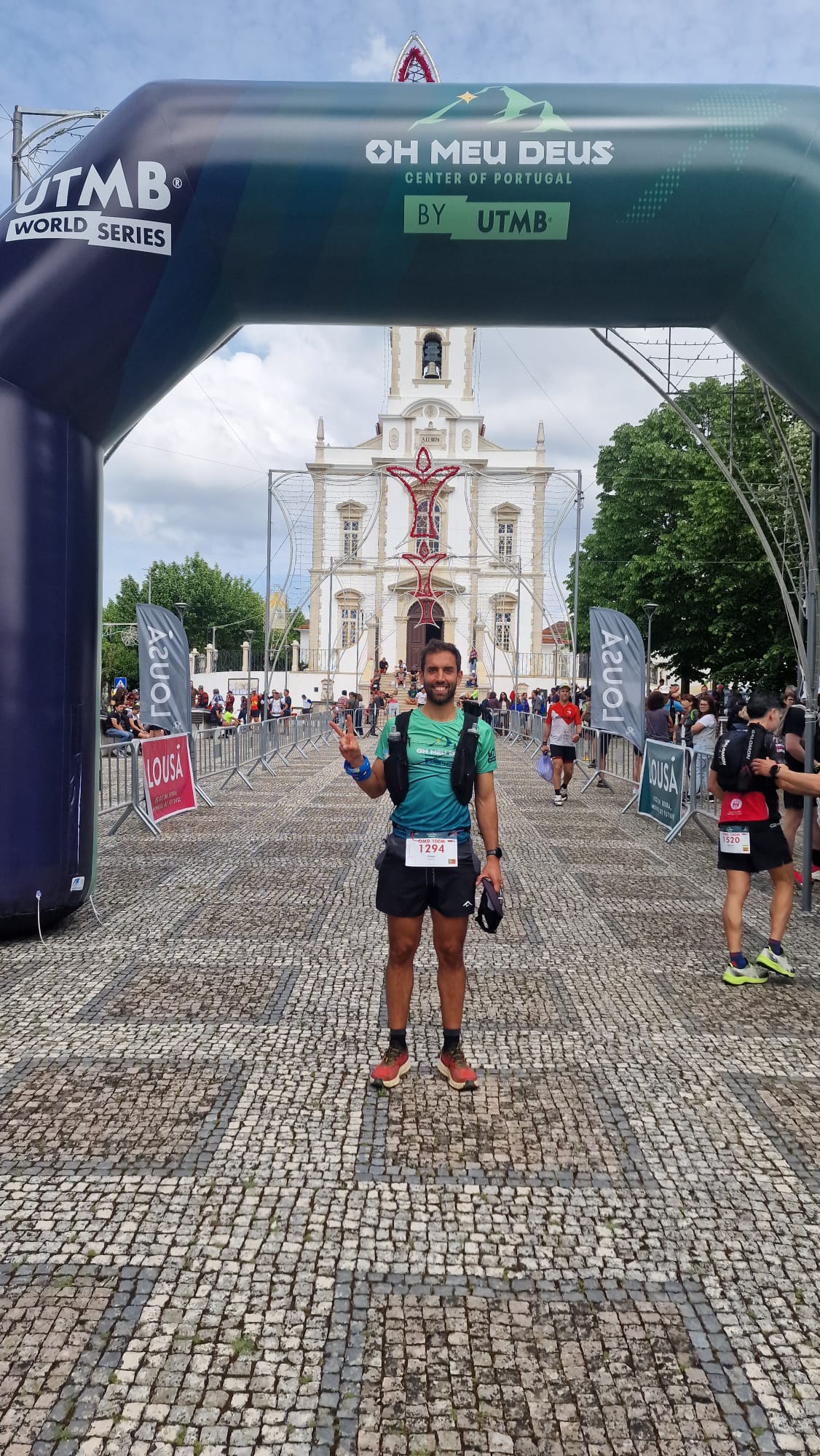
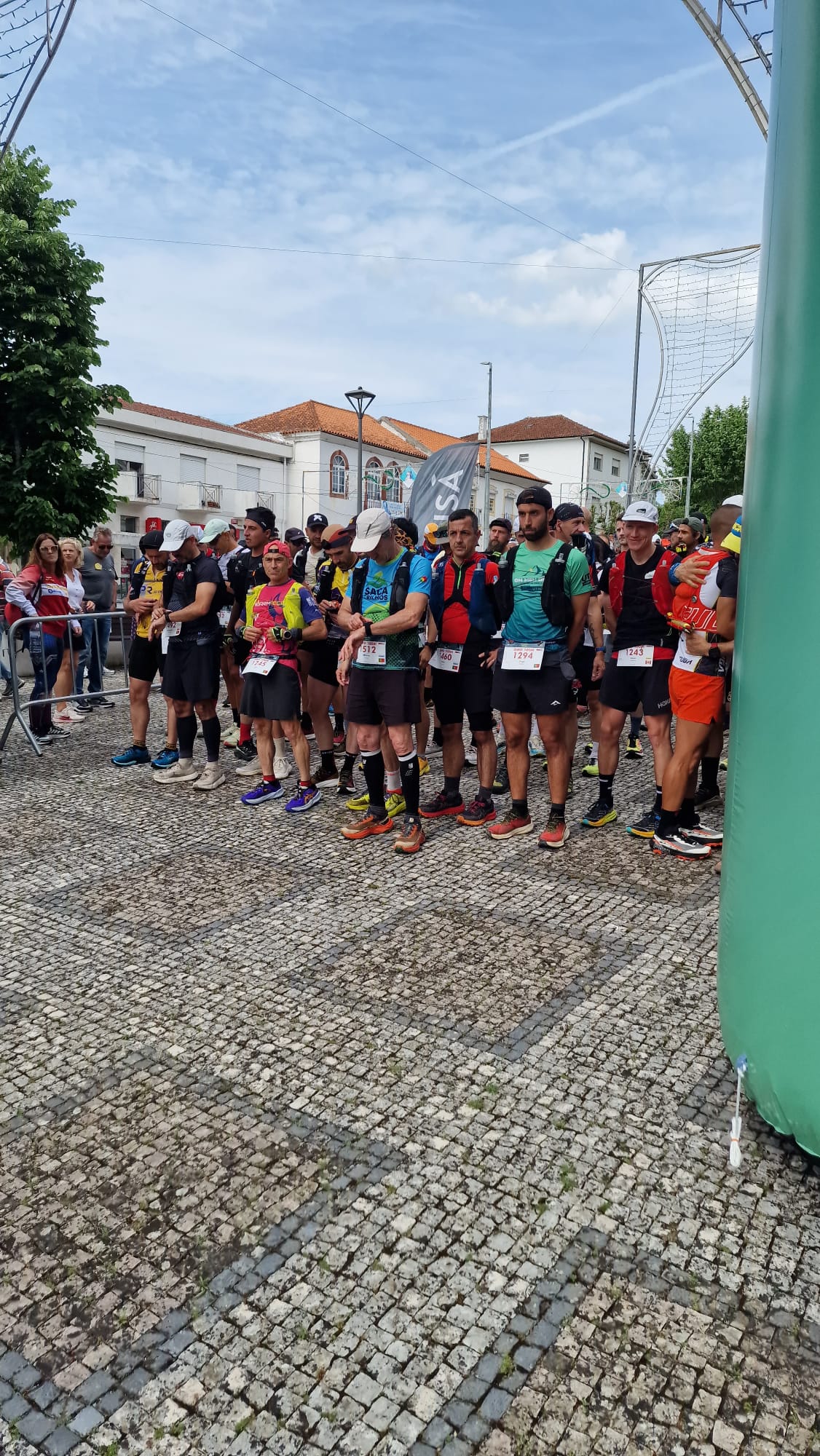
It was at the start that the race began going south. Five minutes before the gun, the organization announced the course had been changed: a landslide had blocked part of the original route and we’d have three extra kilometers to cover. They didn’t say which part. Honestly, I didn’t pay much attention — across all the UTMB races I’d done, the course marking had been so good I felt I could navigate with my eyes closed. Not this time.
I had a strong start and was running in the front group. Around kilometer 5 we hit a bifurcation with no course markers. To the left, some red markers matched the GPX file. To the right, no visible markers and nothing on the GPX either. So we went left, following the red markers and the track — until the red markers disappeared.
Lesson number one: if you don’t see markers from the race you’re doing, stop immediately and turn back.
We didn’t. We kept going on the GPX track and at some point we arrived at the landslide. It was extremely draining — passing above and below fallen trees, scrambling along exposed narrow paths, trying to find the line and it was warm. One of the runners called the organization. They told us we’d have to turn back or be disqualified. We kept going; it was already too much to turn back and stopping outright felt worse than finishing the detour.
Once we got back onto the marked road, I felt completely drained — and we were only 8 kilometers in. I had no idea whether we were ahead of the field or behind it. I had to sit down for a moment to take a breath and re-energize.
Despite eating exactly as planned, I was hungry and slightly disoriented when I reached the first aid station. As I pulled in, the first two runners from the group that hadn’t taken the wrong turn — and so were now genuinely leading the race — arrived too. They gave me hard looks and started saying I had cheated, that what I’d done wasn’t acceptable. If only they knew how hard it had been to follow that GPX. As you can imagine, this didn’t help my mental state.
I left for the second section, saw my dad and brother again and pushed on at a strong pace. Approaching the second aid station I had my second symptom of hypoglycemia — only now do I know that’s what it was — blind spots in my left eye. I went through the second aid station more slowly to make sure I felt okay, ate more than planned and took extra food with me. My sight cleared and I continued.
The course marking was far from perfect. The markers were green, which made them hard to distinguish from the trees. Often they had fallen to the ground or been placed high up between leaves. Between the second and third aid stations, things went downhill. I was actually looking forward to the night section for the cooler temperatures.
Further on, on a road, I got lost again and had to backtrack 300 meters. This rattled me — even on asphalt, navigating by markers alone was difficult. The organization had decided that small reflective squares were enough; in the wind, they often hung crooked and went invisible to my headlamp.
Then, around kilometer 48, something hit me harder than usual. Out of the blue, I felt something was really off. I felt super low on energy, and it was like something inside me was sluggish. Knowing I still had 110 kilometers to go, and given everything that had already happened, I decided on the spot to stop. Fortunately, an organization ambulance was 200 meters ahead. I sat down and called my dad and brother, who were already at the next aid station. They picked me up and we went to the medical tent.
They measured my blood sugar: 48 mg/dL. Normal values start at 80. I had burned too much fuel and not replenished enough.
After being extremely well taken care of, the three of us drove back to where we had started 12 hours earlier. The adventure was over. It was time to sleep, refuel and rest.
What I learned
After coming back from Portugal, I thought a lot about the race and about the preparation that led into it. The lessons fall into three groups.
Fueling
The simple version: 80g/hour was not enough for a race with high pace, warm weather, and steep climbs. I need to eat more — both before the race and during it.
I also need to stop carrying only the minimum food required to make it between aid stations. That leaves no room for error and on this course there was a lot of error to absorb. Real food, especially baby food, has to come back into my plan; it isn’t just calories, it’s also minerals and vitamins, and it sits in the stomach when sugar starts to fail. The order matters too: real food first to set the stomach, sugar later. And electrolytes — I am still not replenishing them properly.
Race execution
I went out too hard. On the first section, with more than 1500D+, I was 40 seconds per kilometer faster than the predicted pace (!!). On a course like this I need to start slower and the simplest way to enforce that is to line up further back. I also need to stay calmer when runners around me change places — panicking about who is in front or behind makes no sense when there are still more than 100 kilometers to cover.
The navigation lessons are concrete: don’t proceed if you stop seeing race markers. Period. And I should probably invest in a watch with proper battery life for active navigation and HR — right now I have to run mine in power-saving mode just to make it to 15 hours, which means no live navigation, which is exactly what I needed at kilometer 5.
Life around the race
Combining 18 hours of training a week, near-daily sauna sessions, a full-time job, a relationship and a life is a lot. Treadmill training was genuinely a game changer for the uphill work and let me build volume with zero injuries — I want to keep that. But the rest of the load deserves more honesty. I need to protect myself better.
Looking forward
One useful way to read what happened: I held the front of the race for 50 kilometers and the reason I had to stop wasn’t pace — it was fueling. If I fix the fueling, I might be able to hold that pace for far longer. That’s where I’ll focus.
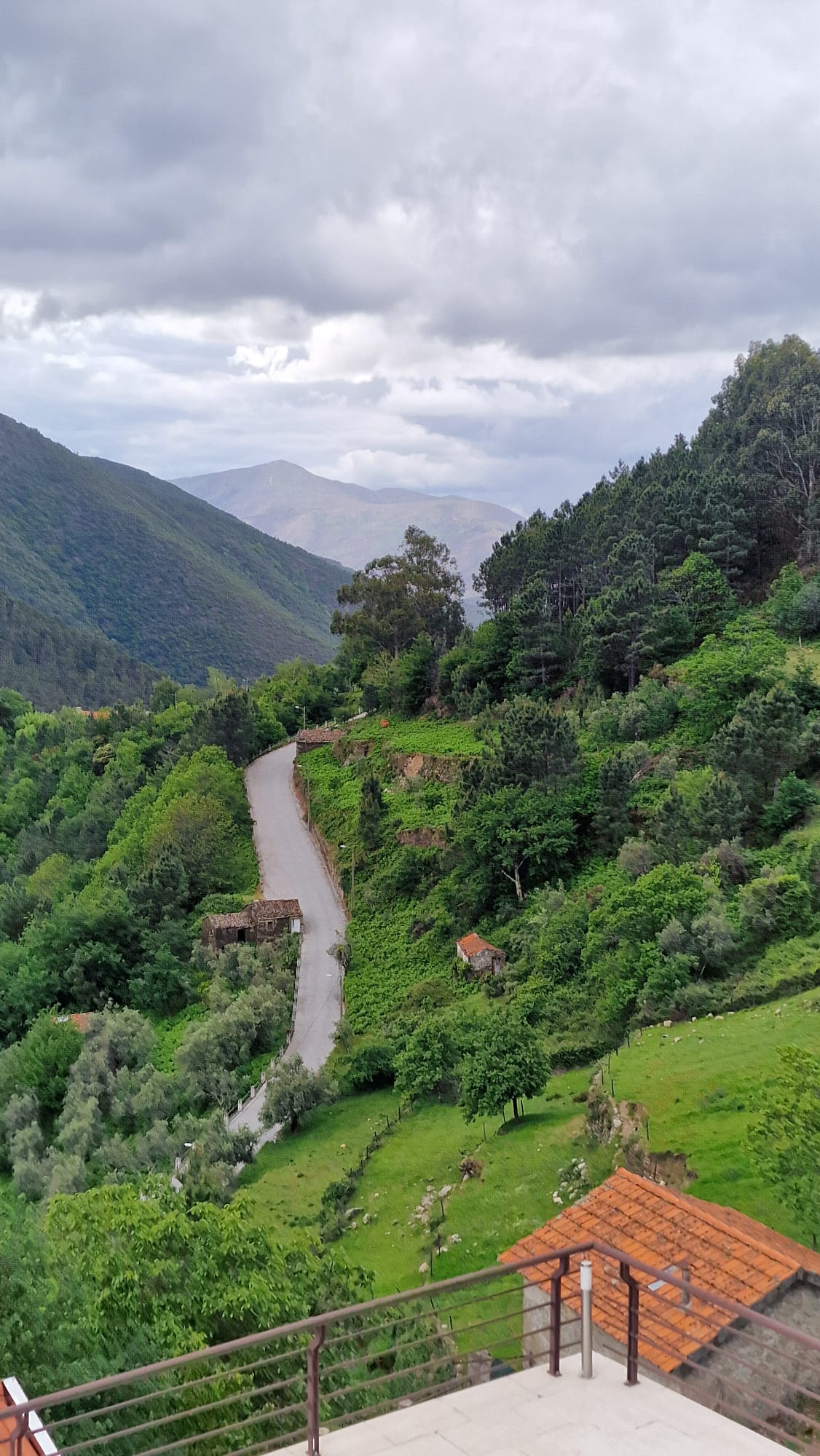
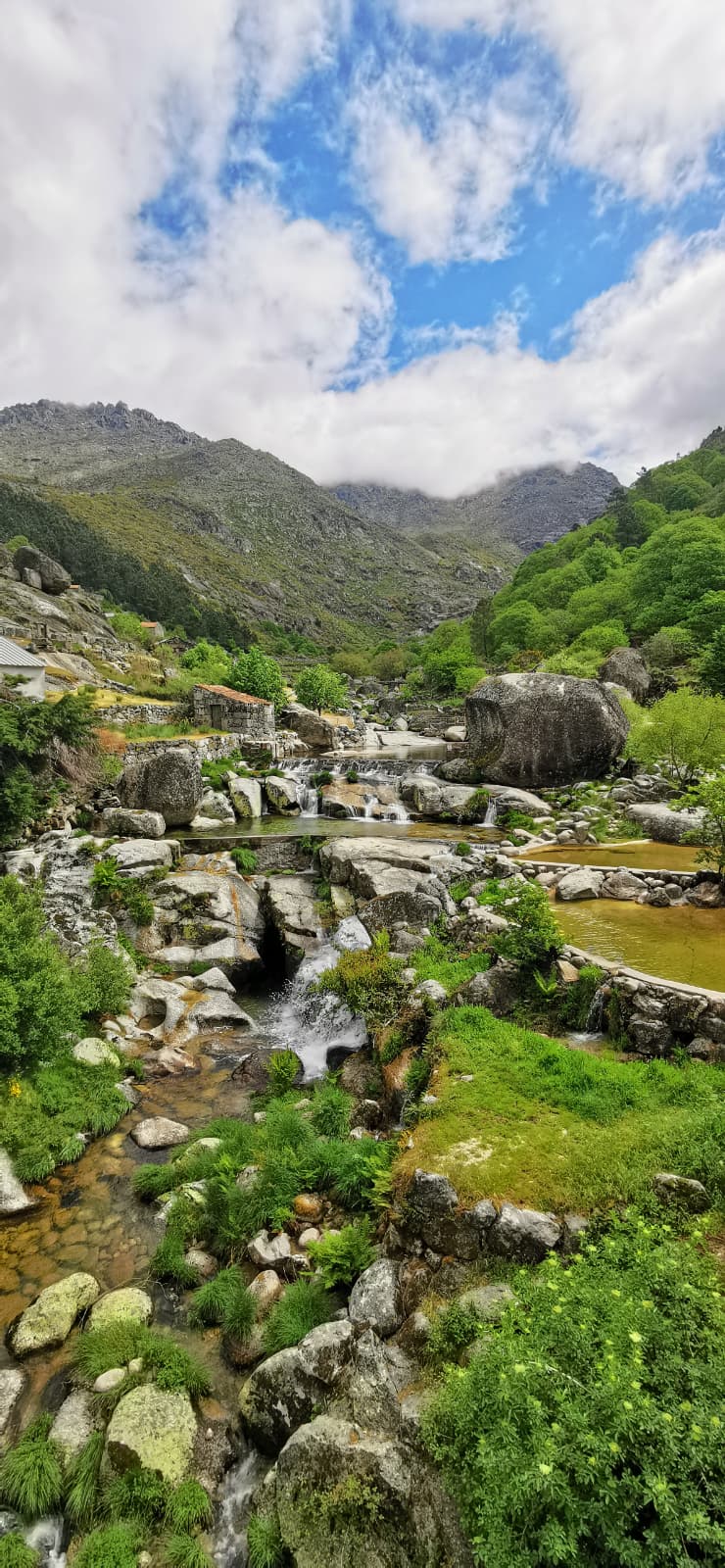
On the positive side, the parts of the course I did see were gorgeous and the people were warm. I was looked after exceptionally well at the medical tent and always felt safe. The day after the race, my dad, brother and I went to visit other parts of the course — some of the most iconic terrain in Portugal — and it was beautiful.
This is a tough race. The number of DNFs proves it. When I finished the 100M in Nice I said I’d only do this distance again on a special occasion. Portugal hosting a UTMB World Series race was that occasion — maybe I tried to chew too much. Whatever the answer, I will be back, as a different runner: stronger, better prepared, better fueled.
For now, it’s time to let this sink in, train differently for a while, and focus on other parts of the sport. I want to do fewer kilometers and enjoy the ones I do more. I want to spend more time with Fanny. And I want to get that iron level back up.

